What should a tree service website include?
A tree service website needs a visible phone number and call-to-action above the fold, a clear services list, town or service-area coverage, real job photos, an emergency contact path, genuine reviews, an FAQ section, schema markup, and fast mobile pages. Every item on this checklist solves a specific problem a homeowner or a search engine runs into.
What it means
This is a checklist, not a style guide. A tree service website can look however the owner wants — the items below are about whether a homeowner can find what they need fast enough to call, and whether a search engine or AI answer tool can tell what the business actually does and where it works.
A real before-and-after
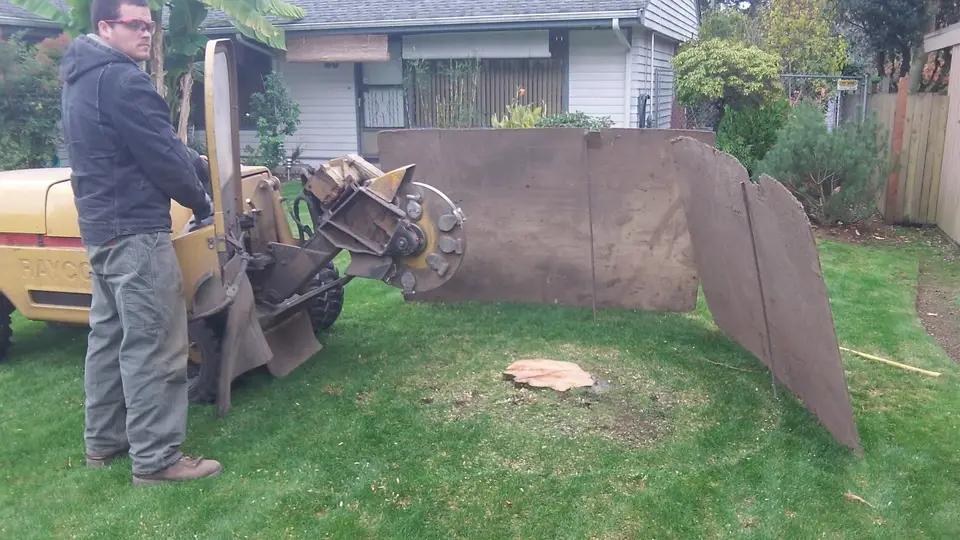
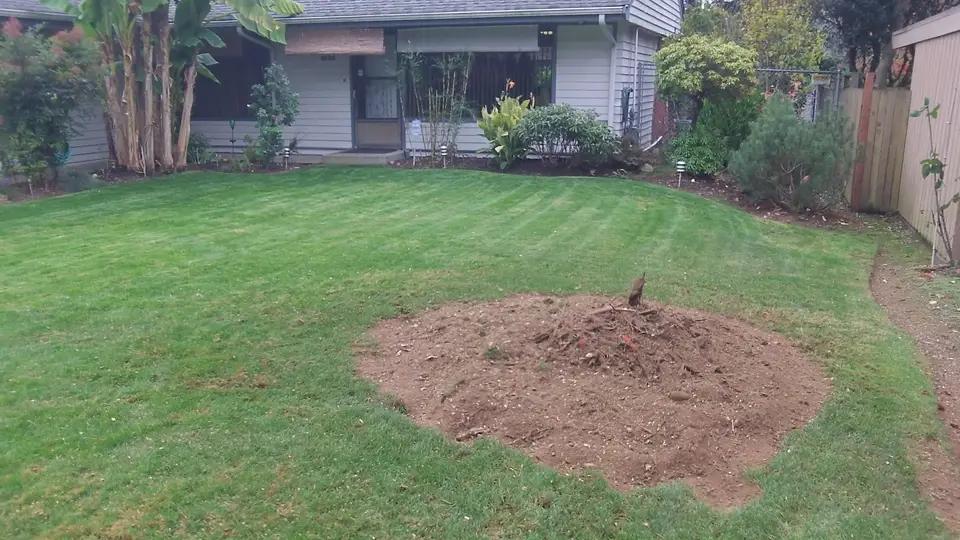
This is what “real work photos” actually looks like: the same stump, before and after grinding — not a stock photo standing in for a company's own job.
The checklist
Phone number and a call-to-action above the fold
Before anyone scrolls, they should see a clickable phone number and a clear next step — request an estimate, call now, or send a photo. Tree work is often urgent, and a buried phone number costs calls.
A clear services list
Removal, trimming, stump grinding, storm cleanup, land clearing — whatever the crew actually does, spelled out in plain language. A vague "tree services" line makes a visitor guess, and guessing visitors leave.
Town and service-area coverage
A page or clear section for each town or county actually served. This is what tells both a homeowner and Google where the crew works — a single generic "serving the area" line does neither job well.
Real work photos, never stock photos presented as a company's own crew
Actual before-and-after shots, actual trucks, actual crew on actual jobs. A generic stock photo of someone else's bucket truck, shown as if it were this company's work, is a real trust problem the moment a homeowner notices — and many do.
An emergency path
A visible, obvious way to reach someone urgently — a storm-damage line, an "available now" note, or at minimum a phone number that is answered, not just displayed. A fallen tree on a roof is not a next-business-day problem for the homeowner calling.
Reviews and proof, only if they are real
Genuine, sourced reviews — linked to the actual Google Business Profile or review platform they came from — build trust. Fabricated quotes or invented ratings do the opposite the moment anyone checks, and they are never worth the risk.
An FAQ section
Real answers to the questions homeowners actually ask before calling: what it costs, whether the crew is insured, how fast they can come out. This also gives search engines and AI answer tools real content to cite.
Schema markup
Structured data (FAQPage, LocalBusiness, Article, and similar schema.org types) that describes the page's real content to search engines and AI systems in a format they can parse directly, instead of only crawling plain text.
Fast mobile pages
Most homeowners searching for tree service are on a phone, often standing outside looking at the problem. A page that loads slowly on mobile loses the call before the visitor ever sees the phone number.
What good looks like
A homeowner lands on the page, sees the phone number and a clear next step within a second or two, recognizes the town they live in mentioned specifically, sees a photo that looks like a real job rather than a catalog image, and finds a straight answer to the question in their head — usually "can someone come out soon, and what does this cost." Nothing about that experience depends on flashy design; it depends on the checklist above actually being there.
Mistakes to avoid
- Burying the phone number below a hero image or a long intro paragraph — above the fold means above the fold.
- Using a stock photo of a bucket truck or crew that isn't this company's own, without being clear that it's a representative image rather than this crew's actual work.
- Writing or inventing reviews instead of linking to real ones on an actual review platform — this fails the moment anyone checks, and it's not worth the risk.
- Listing a huge, vague service area instead of the actual towns and counties the crew drives to, which helps nobody find anything specific.
- Skipping schema markup entirely, which leaves search engines and AI answer tools guessing at what the page actually says.
A trade-specific example
A homeowner in a storm-prone county searches for help after a limb comes down on their fence. They land on two tree service sites. The first has a vague "contact us" form and no phone number until the footer. The second shows a phone number at the top, a line reading "storm damage — same-day calls answered," and a photo gallery with a visibly similar storm cleanup job. The second site gets the call, not because it looks more expensive, but because it answered the homeowner's actual question — can someone help me today — in the first few seconds.
How MyCsSite handles it
MyCsSite builds tree service websites with this checklist as the baseline: phone and CTA above the fold, a real services list, a page or section for each town actually served, space for real job photos, an emergency path, schema markup (FAQPage, LocalBusiness and Article types), and a fast, mobile-first build. Reviews are only ever sourced from a business's real review platforms — nothing is invented.
FAQ
What should a tree service website include?
A tree service website should have a visible phone and call-to-action above the fold, a clear services list, town or service-area coverage, real work photos, an emergency contact path, real reviews, an FAQ section, schema markup, and fast mobile pages. Each piece answers a specific question a homeowner or a search engine is asking.
Do tree service websites need real photos or can they use stock images?
Stock photos are fine as general background imagery, but they should never be presented as a specific company's own crew or trucks. Real before-and-after job photos are what actually build trust with a homeowner deciding who to call.
Why does a tree service website need an emergency path?
A lot of tree service calls are urgent — storm damage, a leaning tree, a limb on a roof. A visible, obvious way to reach someone right away (not just a generic contact form) is often the difference between getting the call and losing it to a competitor.
Does schema markup actually matter for a tree service website?
Yes. Schema markup (FAQPage, LocalBusiness and similar structured data) gives search engines and AI answer tools a parseable description of the page's real content, which helps the page get surfaced and cited accurately instead of relying only on crawled text.
See the full build on tree service website design, or how local search visibility fits in on local SEO for tree service companies.
See how your current site measures up
Tap the towns you think you cover. We will show you what Google shows a homeowner in each one, and email you the one-page report. Free, no call required.